
Handcrafted jewellery is made by artisans who use their skills, creativity, and different materials to create individual pieces. Unlike mass-produced jewellery, handmade designs often show the personal style of the maker. Rings, necklaces, bracelets, earrings, and pendants can all be created using a wide variety of materials.
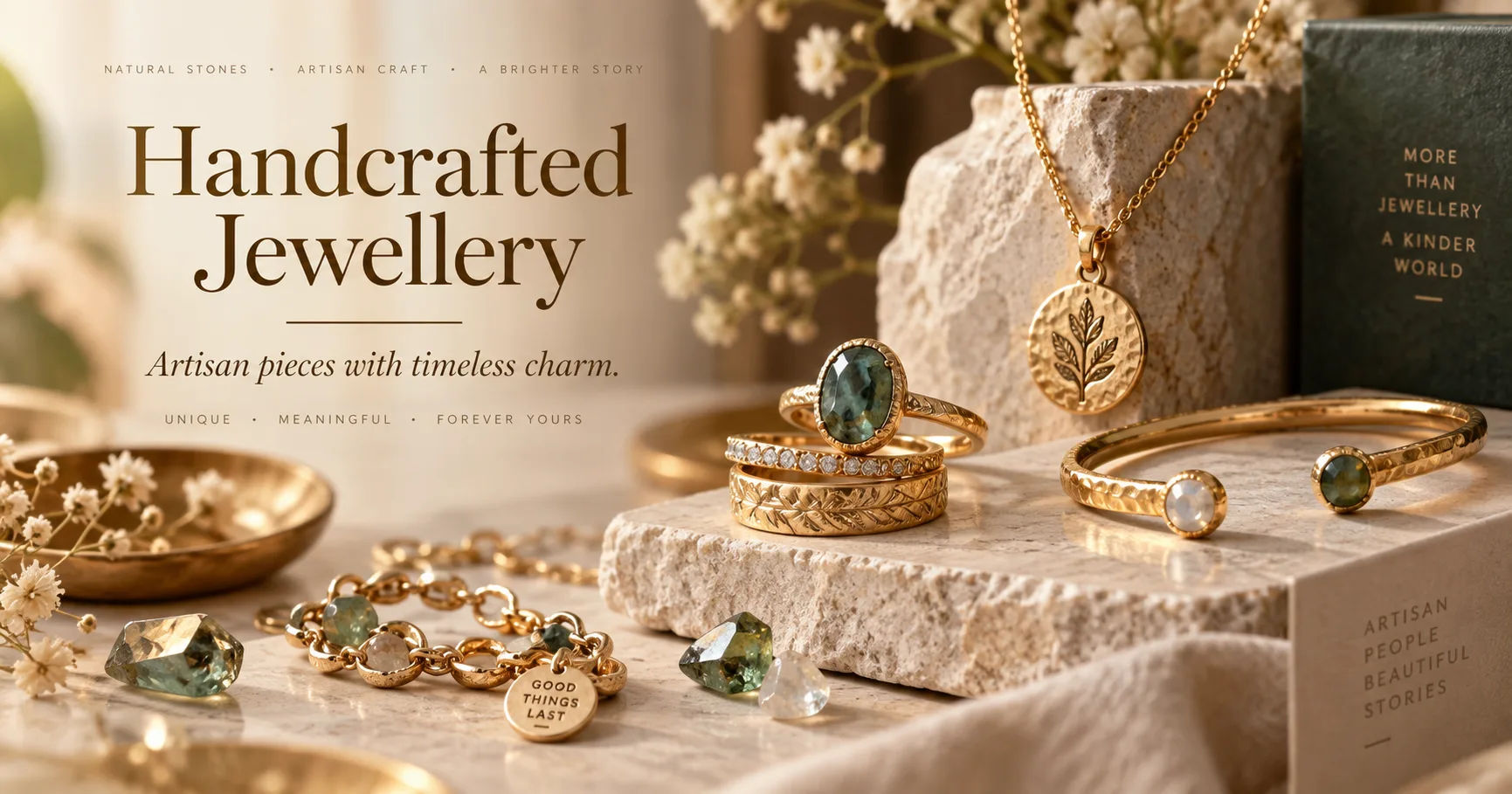
The materials selected for a piece affect its appearance, durability, weight, comfort, and price. Some artisans work mainly with precious metals and gemstones, while others use beads, wood, glass, clay, fabric, or recycled materials. Many designs also combine several materials to create a distinctive look.
Understanding these materials can help buyers choose jewellery that matches their style, budget, and everyday needs. It can also help people appreciate the amount of work involved in creating a handmade piece.
Precious Metals Used in Handcrafted Jewellery
Precious metals are among the most traditional materials used by handcrafted jewellery makers. Gold, silver, and platinum are valued for their beauty, durability, and long-lasting appeal.
Gold
Gold is one of the most popular materials in jewellery making. It has a naturally warm appearance and can be shaped into detailed designs.
Pure gold is very soft for everyday jewellery, so it is commonly mixed with other metals to make it stronger. This creates different karats, such as 18-karat and 14-karat gold.
Gold can also have different colors. Yellow gold has its traditional golden appearance, while white gold and rose gold are created by combining gold with other metals.
Artisans may use gold to make delicate chains, statement rings, earrings, pendants, and other decorative pieces. Because gold is valuable, jewellery made with it can be more expensive than pieces made from common metals.
Sterling Silver
Sterling silver is another widely used material. It is known for its bright, elegant appearance and is generally more affordable than gold.
Sterling silver normally contains silver combined with a small amount of another metal, commonly copper. The additional metal improves strength and makes the material more suitable for jewellery.
It can be polished to produce a bright finish or deliberately given an oxidized appearance for a darker, antique-inspired style.
Silver is especially popular among artisans because it can be shaped, engraved, textured, and combined with stones relatively easily.
Platinum
Platinum is a dense and durable precious metal. It has a naturally white appearance and is often associated with fine jewellery.
It is resistant to corrosion and can hold gemstones securely when used in suitable settings. Platinum is also relatively heavy compared with many other jewellery metals.
Because of its properties and value, it is often used for high-end rings and other fine jewellery.
Alternative Metals
Not every artisan works with precious metals. Many handmade designs use alternative metals because they can offer affordability, strength, or a particular visual style.
Brass
Brass is an alloy made primarily from copper and zinc. It has a warm golden appearance that can resemble gold without the same material cost.
It is commonly used for artistic earrings, pendants, bracelets, and decorative components.
Over time, brass can develop changes in its surface appearance. Some makers polish it regularly, while others intentionally allow it to develop a vintage look.
Copper
Copper has a distinctive reddish-orange tone. It is easy to work with and is often used in artistic jewellery designs.
Its natural color can create a strong visual contrast when combined with silver, beads, or gemstones.
Copper can also develop a patina as it ages, giving handmade pieces an aged or rustic appearance.
Stainless Steel
Stainless steel is valued for its strength and resistance to corrosion. It is often used in contemporary jewellery.
It can provide a clean, modern appearance and is suitable for people who prefer durable accessories.
Steel can also be combined with other materials, including enamel, beads, and decorative stones.
Gemstones
Gemstones can add color, texture, and character to handmade jewellery. Artisans use both precious and semi-precious stones depending on the design and budget.
Precious Gemstones
Diamonds, rubies, sapphires, and emeralds are traditionally considered precious gemstones.
Diamonds are known for their hardness and brilliance. Rubies are recognized for their rich red color, while sapphires are commonly associated with blue shades but can occur in other colors as well.
Emeralds are known for their distinctive green appearance. These stones can be used as centerpieces or smaller accents.
The value of a gemstone depends on factors such as quality, color, clarity, size, cut, rarity, and origin.
Semi-Precious Gemstones
Many artisans use stones such as amethyst, turquoise, garnet, citrine, moonstone, lapis lazuli, and quartz.
These stones provide a wide range of colors and patterns. Natural variations mean that two stones of the same type may not look exactly alike.
This natural difference is one reason gemstones work particularly well in handmade designs.
Pearls
Pearls are another traditional jewellery material. They are produced inside certain mollusks and are valued for their smooth surface and natural luster.
Natural pearls are rare, while cultured pearls are more commonly available. Cultured pearls are produced with human involvement but still develop through natural processes inside the mollusk.
Pearls can be used in necklaces, earrings, bracelets, rings, and decorative pendants.
Their soft appearance works well with both classic and modern designs.
Glass
Glass is a versatile material that gives artisans many creative possibilities. Handmade glass beads can have different colors, shapes, textures, and patterns.
Some jewellery makers use lampworked glass, where glass is heated and shaped using specialized tools.
Glass can imitate the appearance of gemstones or simply provide its own colorful visual effect.
Because glass can be molded into many forms, it is particularly useful for artistic earrings, necklaces, and statement pieces.
Wood
Wood provides a natural and earthy appearance. Different types of wood can vary in color, grain, density, and texture.
Artisans may cut, carve, polish, stain, or paint wood before turning it into jewellery components.
Wooden beads and pendants are common, while larger pieces may feature carved designs.
Lightweight wooden jewellery can also be comfortable for everyday use. Proper finishing and care are important because untreated wood can be affected by moisture.
Clay and Polymer Clay
Clay is used to create colorful and highly customizable jewellery. Polymer clay is especially popular among contemporary artisans because it can be shaped by hand and hardened with controlled heating.
Makers can create flowers, geometric shapes, miniature designs, abstract patterns, and many other forms.
Polymer clay is relatively lightweight, making it useful for large earrings and statement accessories.
Its versatility allows small jewellery businesses and independent artists to experiment with unusual designs.
Beads
Beads are available in countless materials, sizes, and styles. They may be made from glass, wood, ceramic, stone, metal, acrylic, or other materials.
Artisans can combine different beads to create necklaces, bracelets, earrings, and layered designs.
Seed beads are particularly useful for detailed patterns because of their small size. Larger beads can create bold visual effects.
The choice of bead material can significantly change the overall character of a piece.
Ceramic
Ceramic is another material used in artistic jewellery. It can be molded into shapes before being dried and fired.
Ceramic pieces may be glazed to create glossy surfaces or left with a more natural finish.
Hand-painted ceramic jewellery can feature floral designs, geometric patterns, cultural motifs, or abstract artwork.
Because each piece can be decorated individually, ceramic jewellery often has a strong artistic quality.
Enamel
Enamel is a glass-like material that can be applied to metal and then heated to create a durable decorative surface.
It allows artisans to introduce bright colors and detailed patterns to metal jewellery.
Enamel techniques can include different methods that produce smooth, textured, transparent, or opaque finishes.
This material is particularly useful when an artisan wants color to become a major part of the jewellery design.
Fabric and Thread
Fabric, thread, cord, and yarn can also be used in handmade jewellery. These materials are especially common in textile-based bracelets, necklaces, and woven accessories.
Macramé is one example of a technique that uses knots to create jewellery designs.
Fabric can also be combined with beads, metal charms, embroidery, or decorative stitching.
These materials are usually lightweight and can provide a casual appearance.
Recycled and Upcycled Materials
Some artisans create jewellery from recycled or repurposed materials. This may include old metal components, discarded glass, paper, fabric, buttons, or other objects.
Upcycling gives existing materials a new purpose instead of treating them simply as waste.
For example, an artist may transform an old button into a pendant or reuse decorative metal pieces in a new bracelet.
The final result can be highly individual because the original material may have its own history and appearance.
Natural Materials
Natural materials can add an organic quality to handmade designs. Common examples include shells, seeds, nuts, feathers, bone, horn, and naturally shaped stones.
Shells
Shells can be polished, drilled, carved, or combined with other materials. They are especially common in beach-inspired and bohemian jewellery.
Seeds and Nuts
Certain seeds and nuts can be dried and prepared for use as beads. Their natural shapes and patterns can make each piece visually different.
Feathers
Feathers can be used as decorative elements in earrings and necklaces. They are lightweight and often associated with bohemian or artistic styles.
The source and treatment of natural materials matter. Responsible sourcing can help reduce environmental and ethical concerns.
Synthetic Materials
Synthetic materials such as acrylic and resin have become popular in modern jewellery making.
Acrylic
Acrylic can be produced in many colors and finishes. It is lightweight and can be cut into geometric or artistic shapes.
Large acrylic earrings can therefore be visually bold without being as heavy as some metal designs.
Resin
Resin allows artisans to preserve or suspend decorative objects inside transparent or colored material.
Dried flowers, glitter, small shapes, pigments, and other decorative elements can be incorporated into resin designs.
Resin jewellery can therefore have a highly customized appearance.
Choosing the Right Material
The best material depends on how the jewellery will be used.
For everyday pieces, durability and comfort may be more important than dramatic decoration. Stainless steel, sterling silver, and suitable gold alloys are common choices for different everyday applications.
For special occasions, gemstones, pearls, gold, platinum, glass, and detailed enamel work may be selected for their decorative qualities.
Weight should also be considered. Large earrings made from heavy materials may become uncomfortable after extended wear.
Skin sensitivity is another consideration. Some people may react to particular metals or alloys. Checking the material composition can help reduce the chance of an unwanted reaction.
Maintenance is equally important. Silver can tarnish, wood can be affected by moisture, and some gemstones require more careful handling than others.
How Materials Affect Jewellery Design
Materials do more than determine appearance. They influence what an artisan can physically create.
Soft metals may be easier to shape and engrave. Harder materials may require specialized tools.
Gemstones can determine the shape and structure of a ring or pendant. A fragile stone may require a protective setting.
Lightweight materials allow artisans to create large statement pieces without excessive weight.
Texture also plays an important role. A polished stone creates a different visual experience from rough stone, while brushed metal looks different from highly polished metal.
Caring for Handcrafted Jewellery
Proper care can help handmade jewellery maintain its appearance for longer.
Jewellery should generally be protected from unnecessary exposure to water, perfumes, cosmetics, harsh chemicals, and excessive heat.
Different materials require different cleaning methods. A soft, dry cloth may be suitable for some metal pieces, while certain gemstones may require more specialized care.
Jewellery should also be stored separately when possible. Keeping pieces apart can reduce scratches, tangling, and accidental damage.
For valuable pieces, professional cleaning and inspection may occasionally be appropriate.
Why Material Choice Matters
Material selection is one of the most important parts of jewellery making. It affects durability, appearance, comfort, maintenance, and cost.
An artisan must consider how different materials work together. A beautiful gemstone may need a strong setting, while a delicate bead may require a lightweight supporting structure.
This balance between appearance and function is an important part of jewellery craftsmanship.
The material can also communicate a particular style. Gold may create a classic and luxurious appearance, wood can suggest a natural aesthetic, while resin and acrylic can produce contemporary designs.
Conclusion
Handcrafted jewellery can be made from an impressive variety of materials, ranging from traditional precious metals to natural, recycled, synthetic, and textile-based materials. Gold, silver, platinum, brass, copper, gemstones, pearls, glass, wood, clay, beads, ceramic, enamel, fabric, resin, and acrylic are just some of the options available to artisans.
Every material brings its own characteristics. Metals can provide structure and durability, gemstones can add color and individuality, while materials such as wood, clay, glass, and resin give artists greater freedom to experiment.
The most suitable choice depends on the intended use, personal style, budget, comfort, and required level of care. Understanding these differences makes it easier to select jewellery that is attractive as well as practical.
One of the most appealing qualities of handmade jewellery is the combination of material and craftsmanship. An artisan can take a simple piece of metal, stone, glass, wood, or another material and turn it into something with a distinct visual identity.
Whether the design is simple and understated or colorful and elaborate, the materials are an essential part of its character. By learning about them, buyers can better understand the value, care, and creativity behind each individual piece.