
Stories about cheating spouses often attract attention because they combine betrayal, emotional conflict, and the hope that wrong actions eventually have consequences. Online, karma stories cheating content is especially popular because readers enjoy seeing situations where an unfaithful partner eventually faces the results of their choices.
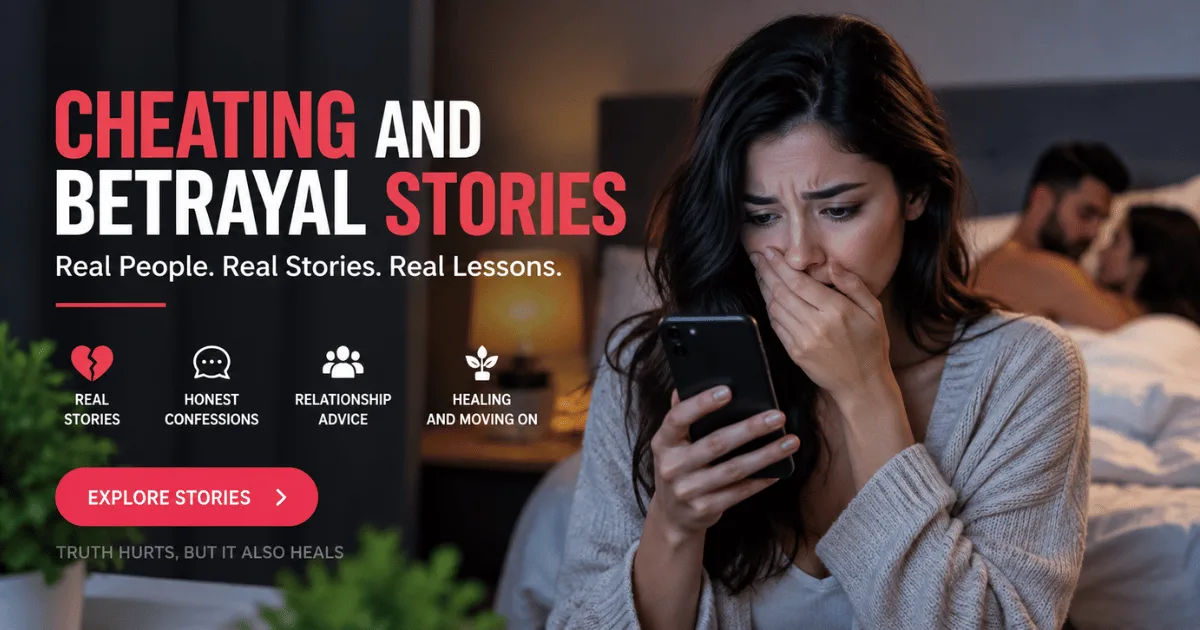
But an important question remains: are these stories actually true?
The answer is complicated. Some stories about cheating, broken relationships, and consequences may be based on real experiences. Others are heavily edited, exaggerated, fictionalized, or completely invented for entertainment. Without reliable evidence, it is difficult to know exactly what happened behind an anonymous post or dramatic social media story.
Understanding how these stories are created can help readers separate realistic experiences from content designed mainly to attract clicks, comments, and shares.
What Are Karma Stories About Cheating Spouses?
Karma stories usually describe a situation in which someone behaves badly and later experiences an unexpected consequence.
In stories involving marriage or relationships, the central event is often infidelity. A husband or wife cheats on their partner, hides the affair, or leaves the relationship for someone else. Later, something happens that appears to punish the unfaithful spouse.
For example, a story might claim that someone cheated on their spouse and later discovered that their new relationship was based on deception. Another might describe an unfaithful partner losing financial security, social support, or the relationship they expected to build.
These narratives are commonly described as karma stories cheating because the central theme is that dishonest behavior eventually comes back to affect the person who caused the harm.
However, karma in these stories is usually a storytelling concept rather than proof of a universal force that guarantees punishment.
Why Are These Stories So Popular?
They Provide Emotional Satisfaction
Infidelity can be extremely painful, especially for the person who has been betrayed.
Readers may experience anger or frustration when they hear about someone being deceived. A story in which the cheating spouse later suffers consequences can therefore provide a sense of emotional satisfaction.
It creates a simple structure: someone did something wrong, and eventually they faced the results.
Real relationships are rarely that simple, but storytelling often is.
They Offer a Sense of Justice
People naturally care about fairness.
When someone appears to escape responsibility after cheating, readers may feel that justice has not been served. A dramatic ending can restore that sense of balance.
This is one reason karma stories cheating posts can receive thousands of views and comments. They often provide the ending that people wish would happen in real life.
They Are Easy to Share
A dramatic relationship story can be summarized quickly.
A person cheats. Their spouse discovers the truth. The relationship ends. The cheater supposedly regrets everything. This creates a strong emotional arc that works well on social media platforms.
The more surprising the ending, the more likely people may be to share the story with others.
Are All Karma Stories Fictional?
No.
It would be incorrect to assume that every story is fake. People genuinely experience infidelity, divorce, relationship breakdowns, financial disputes, and unexpected consequences.
Real life can sometimes produce events that sound almost unbelievable.
A person may cheat and later lose their marriage. Someone may leave a supportive partner for an affair and eventually regret the decision. A hidden relationship may become public and damage someone's reputation or friendships.
These events can happen naturally.
The problem is that readers often cannot verify whether a particular online story is genuine.
Why Is It Difficult to Verify Them?
Anonymous Stories Provide Little Evidence
Many relationship stories are published anonymously.
The writer may change names, locations, occupations, ages, and other details to protect privacy. While this is understandable, it also means readers have limited ways to confirm the account.
A post saying that a spouse cheated does not automatically prove that the events occurred exactly as described.
One Person Usually Tells the Story
Relationship conflicts involve multiple people, but online posts are generally written from one person's perspective.
That means readers usually hear only one version of events.
The writer may genuinely believe their interpretation is correct. However, important information from the other spouse may be missing.
This is particularly important when reading karma stories cheating narratives because the story often presents one person as completely innocent and the other as completely responsible.
Real relationships can be more complicated.
Details May Be Changed
Even genuine stories can contain altered details.
Someone might change the names or ages of the people involved. They might combine several events into one story. They could also leave out certain information because it is embarrassing or private.
Therefore, a story can be based on a real experience without being a completely accurate record of what happened.
Signs That a Karma Story May Be Exaggerated
The Ending Is Too Perfect
One warning sign is an ending that seems almost perfectly designed for entertainment.
For example, an unfaithful spouse might supposedly lose everything immediately, while the betrayed partner becomes extremely successful and finds a perfect new relationship.
Real life is usually messier.
Consequences can take years, and sometimes people who behave badly do not experience dramatic punishment.
Everyone Behaves Like a Character
Some stories include conversations that seem unusually polished.
Every person delivers the perfect comeback. The cheating spouse gives a dramatic confession. The betrayed partner responds with an impressive speech.
Real conversations are often less organized. People interrupt one another, misunderstand things, become emotional, and fail to find the right words.
Highly scripted dialogue can be a clue that a story has been dramatized.
There Are Extreme Coincidences
Some karma stories cheating posts depend on unlikely coincidences.
The cheating spouse might supposedly be exposed at exactly the right moment. Their affair partner may immediately betray them. Their employer may discover their behavior. Their entire social circle may turn against them within a few days.
Any one of these events can happen, but a long chain of perfect coincidences should make readers cautious.
The Story Encourages Strong Reactions
Content creators understand that anger and surprise increase engagement.
A story may therefore be written to make readers furious, excited, or eager for revenge.
This does not automatically mean it is fake. However, emotional manipulation is a reason to pause before accepting every detail as fact.
Why Real Cheating Stories Can Sound Unreal
It is also important not to make the opposite mistake.
Sometimes genuine events sound fictional because people make complicated and unexpected decisions.
An individual might maintain an affair for years without being discovered. Another person might suddenly confess. A spouse could discover evidence accidentally. A marriage might survive infidelity despite the emotional damage.
There is no single predictable pattern.
This means unusual events should not automatically be labeled fake.
The better approach is to distinguish between "this sounds unbelievable" and "there is evidence that this is false."
What Does Karma Actually Mean?
Karma has different meanings depending on religious, philosophical, and cultural traditions.
In everyday conversation, people often use the word to mean that someone's actions eventually produce consequences.
In popular karma stories cheating content, karma is usually presented in this informal sense.
For example, if someone deceives their spouse and later experiences deception themselves, readers may call that karma.
But consequences do not necessarily happen because of a supernatural mechanism. Human decisions naturally create consequences.
Cheating can damage trust, create conflict, lead to divorce, and affect friendships and family relationships. Those outcomes can be explained without assuming that the universe deliberately punished someone.
The Difference Between Karma and Natural Consequences
This distinction is important.
Suppose a married person repeatedly lies to their spouse. Eventually, their partner discovers the lies and ends the relationship.
Calling this "karma" is understandable in everyday language.
However, the breakup may simply be a natural consequence of the person's behavior.
Trust is an important part of a relationship. When trust is repeatedly damaged, the relationship may become difficult to maintain.
In this sense, many karma stories cheating narratives can be understood as stories about consequences rather than supernatural justice.
Can Social Media Make Stories Look More Real?
Absolutely.
A story can appear convincing because it is presented in a personal format.
The writer may use first-person language, provide dates, describe conversations, and include emotional details. These techniques can make readers feel as though they are reading someone's private diary.
But realistic writing does not prove that the underlying events are real.
Modern content can be written specifically to imitate genuine personal experiences.
Some stories may also be rewritten multiple times as they spread between websites, forums, videos, and social media accounts. With each version, additional details may be added.
Eventually, readers may encounter a highly dramatic version that is very different from the original account.
How Should You Evaluate a Story?
Look for a Reliable Source
A story connected to a verifiable interview, court document, reputable news report, or direct statement is easier to evaluate than an anonymous post.
This does not mean every news report is perfect. It simply gives readers more information to compare.
Separate Facts From Opinions
Pay attention to what the writer actually knows.
Statements such as "I saw the message" are different from statements such as "I know exactly what my spouse was thinking."
The first may describe an observable event. The second is an interpretation.
Keeping this distinction in mind helps readers evaluate relationship stories more objectively.
Avoid Treating Comments as Evidence
Comments can make a story appear more credible because hundreds of people may discuss it.
But popularity does not equal proof.
If thousands of people believe a story, that still does not establish that the events occurred exactly as described.
Why People Believe Karma Stories
Confirmation Bias
People often notice information that supports what they already believe.
Someone who believes that cheaters eventually get punished may remember dramatic karma stories cheating examples while ignoring situations where no obvious consequences occurred.
This is a normal psychological tendency.
Emotional Storytelling
Strong emotions can influence judgment.
When readers feel anger toward an unfaithful spouse, they may be less likely to question the accuracy of a satisfying ending.
That is why emotional distance can be helpful when evaluating online stories.
Simple Moral Lessons
Karma stories usually contain an easy lesson.
"Don't cheat."
"Don't lie."
"Treat people well."
These are understandable messages, and they can make a story memorable.
However, a useful moral lesson does not prove that the story itself is factual.
Should You Trust a Viral Story?
A viral story should be treated as unverified unless there is credible evidence supporting it.
Virality only tells you that many people found the content interesting.
It does not tell you whether the story is true.
This applies especially to highly polished videos, narrated posts, and dramatic relationship stories that provide no source beyond an anonymous narrator.
The safest approach is to enjoy such content as storytelling unless its facts can be independently confirmed.
What Can Readers Learn From These Stories?
Even questionable stories can encourage useful conversations.
They can highlight the importance of honesty, communication, boundaries, and trust in relationships.
They may also remind people that decisions have consequences.
However, readers should avoid assuming that every relationship follows the same pattern.
Someone who cheats does not necessarily experience dramatic "karma." Someone who is betrayed does not necessarily receive a perfect new relationship afterward.
Real life does not guarantee satisfying endings.
The Reality Behind Cheating and Relationships
Infidelity can have serious emotional consequences.
It can damage trust between partners and affect children, relatives, and mutual friends. It may also create financial and legal complications when a relationship ends.
At the same time, every situation is different.
Some couples separate. Some attempt counseling. Some rebuild their relationship. Others remain together but struggle with trust for a long time.
Therefore, online stories should not be used as a universal guide to what will happen after cheating.
Conclusion
So, are karma stories about cheating spouses usually true?
There is no reliable reason to say that they are either all true or all false. Some may originate from genuine experiences, while others may be exaggerated, dramatized, combined with fictional elements, or entirely invented.
The popularity of karma stories cheating content comes largely from its emotional appeal. Readers enjoy stories in which betrayal is followed by consequences because these narratives create a satisfying sense of justice.
Still, satisfaction should not be confused with evidence.
When reading these stories, consider the source, question extraordinary claims, separate facts from assumptions, and remember that anonymous storytelling is difficult to verify.
It is also useful to understand that what people call "karma" may simply be the natural result of their decisions. Lies can destroy trust. Infidelity can end relationships. Dishonesty can damage reputations and friendships. These consequences do not require a supernatural explanation.
Ultimately, the most valuable lesson from karma stories cheating narratives is not whether every dramatic ending is genuine. It is the reminder that choices matter. Healthy relationships depend on honesty, respect, communication, and accountability.
A satisfying online story may end with perfect justice, but real life is rarely so neat. Sometimes people face consequences quickly, sometimes years later, and sometimes there is no obvious punishment at all. Learning to recognize that difference allows readers to enjoy relationship stories without mistaking entertainment for verified fact.