
Pinterest Automation can become a valuable part of a modern digital marketing strategy by helping businesses maintain consistent activity, organize content distribution, and reach audiences who actively search for ideas, products, services, and inspiration.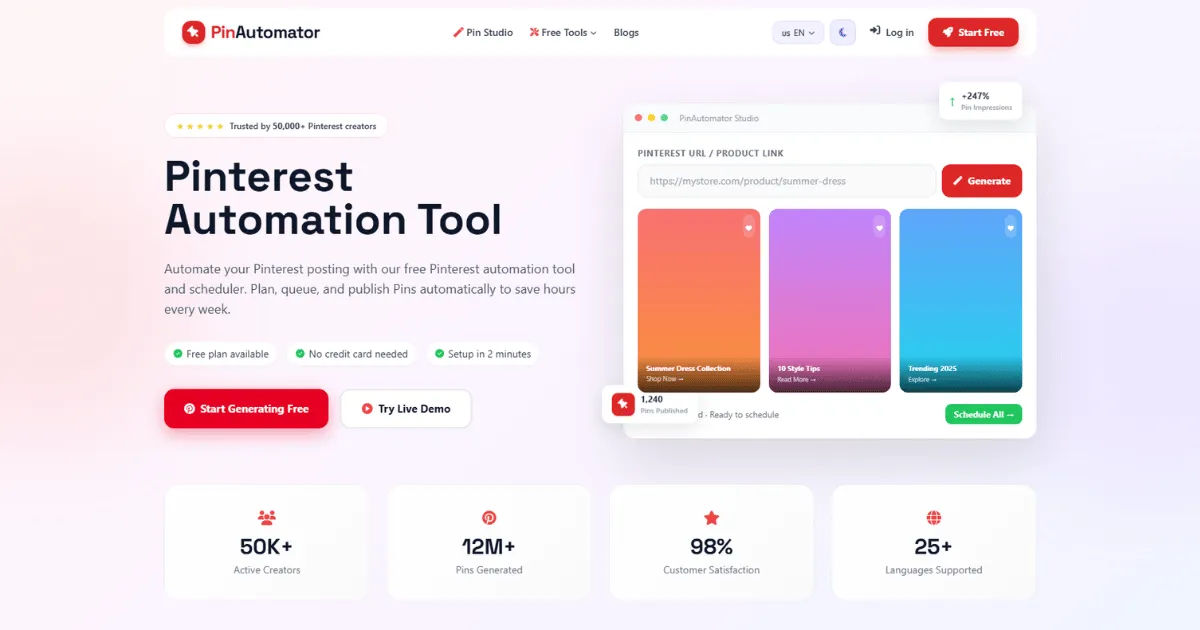
Unlike many social platforms where content can disappear quickly, Pinterest Automation posts can continue generating traffic and engagement long after they are published. This makes automation especially useful for marketers who want to build a sustainable presence without spending hours managing every post manually.
A strong Pinterest strategy is not simply about publishing as many pins as possible. It requires a combination of quality content, keyword research, visual design, consistent publishing, audience understanding, and performance tracking. Automation can support these activities, but it should work alongside human creativity and strategic decision-making.
When used correctly, automation can save time while helping marketers stay consistent. It can also make it easier to plan content around seasonal trends, product launches, blog posts, promotions, and long-term campaigns. However, automation should never replace strategy. Businesses still need to create valuable content, understand their target audience, and monitor results.
This comprehensive guide explains how Pinterest Automation can fit into your marketing strategy, what tasks can be automated, how to build an effective workflow, what mistakes to avoid, and how to measure success.
Role of Pinterest in Marketing
Pinterest is often described as a social media platform, but it also works as a visual discovery and search engine. People use it to discover ideas, research products, plan projects, and find solutions to problems.
Users may search for topics such as home decoration, fashion, recipes, travel destinations, business ideas, fitness routines, wedding planning, or digital marketing. When users discover a useful pin, they may save it for later or click through to the website behind it.
This search-based behavior gives Pinterest an important advantage for marketers. Content can continue receiving attention over time instead of depending entirely on immediate engagement.
For example, a blog post shared on another social platform may receive most of its traffic within a short period after publication. A well-optimized Pinterest pin, however, may continue appearing in relevant searches for weeks, months, or even longer.
This long-term potential makes Pinterest useful for businesses that want to build an evergreen traffic source.
Pinterest can support several marketing goals. These include increasing website traffic, promoting blog content, generating leads, showcasing products, building brand awareness, and supporting online sales.
The platform can be particularly effective for businesses with visually appealing products or content. However, almost any business can potentially benefit if it creates useful visual content that matches what users are searching for.
What Is Pinterest Automation?
Pinterest Automation refers to using tools, systems, and workflows to simplify or schedule repetitive Pinterest marketing tasks.
Instead of manually logging in every day to publish content, marketers can prepare content in advance and schedule it for future publication. Depending on the tools being used, automation may also help with content organization, scheduling, analytics, and workflow management.
The main goal is not to eliminate human involvement. The goal is to reduce repetitive work so marketers can focus more attention on strategy and creative activities.
For example, a business may create 20 high-quality pins for a series of blog articles. Rather than publishing each pin manually, the marketing team can schedule them according to a planned content calendar.
This creates a more organized publishing process.
Automation can also help businesses maintain consistency. Consistency is important because an inactive account may struggle to build momentum, while a regularly updated account can provide users with more opportunities to discover its content.
However, automation must be used responsibly. Publishing large amounts of repetitive or low-quality content can damage the user experience and weaken a brand's reputation.
The best approach is to automate repetitive processes while keeping content quality, originality, and strategic decisions under human control.
Why Pinterest Automation Matters for Marketing
One of the biggest challenges in digital marketing is maintaining consistency.
Marketers often have to manage websites, blogs, email campaigns, social media platforms, advertisements, customer communications, and analytics. Manually handling every Pinterest activity can become difficult, especially for small teams.
Automation can reduce this workload.
Instead of spending time publishing content one post at a time, marketers can prepare content in batches. They can then schedule the content according to their marketing calendar.
This approach makes Pinterest easier to manage as part of a larger marketing strategy.
Another benefit is improved time management. A marketer may spend several hours creating and scheduling content in one session instead of returning to the platform every day.
Automation can also make campaigns more organized.
For example, a business launching a new product may plan pins several weeks in advance. Content can be prepared for the launch announcement, product benefits, educational information, customer questions, and promotional offers.
This creates a structured campaign rather than a series of disconnected posts.
How Pinterest Automation Fits Into a Marketing Funnel
A marketing funnel represents the journey a potential customer takes from discovering a brand to becoming a customer.
Pinterest can support multiple stages of this journey.
At the awareness stage, visual content can introduce users to a brand. Educational graphics, inspirational images, and helpful guides can attract people who are unfamiliar with the business.
At the consideration stage, Pinterest can direct users to detailed resources. These might include blog posts, comparison guides, tutorials, product pages, case studies, or downloadable resources.
At the conversion stage, pins can encourage users to take a specific action. Depending on the business, that action might involve purchasing a product, requesting a consultation, joining an email list, or signing up for a service.
Automation can support each stage by ensuring that relevant content is consistently distributed.
For example, a software company might publish educational pins about productivity at the awareness stage. It could then promote guides about choosing software at the consideration stage. Finally, it might share product-focused content designed to encourage free trials.
The key is to connect Pinterest activity with broader marketing goals.
Building a Pinterest Automation Strategy
Before automating anything, businesses should establish a clear strategy.
The first step is to define the target audience.
Ask questions about who the business wants to reach. What problems do these people have? What information are they searching for? What products or services interest them?
Understanding the audience makes content creation more focused.
The next step is to define marketing objectives.
A business may want to increase blog traffic, generate leads, promote products, or improve brand visibility. Each objective requires a slightly different content strategy.
For example, a website focused on blogging may prioritize traffic generation. An online store may focus more heavily on product discovery and sales.
Once the goal is clear, marketers can determine what type of content should be created and automated.
The strategy should also include a realistic publishing schedule.
There is no need to create an overwhelming schedule that cannot be maintained. A consistent and manageable system is usually better than an aggressive schedule that quickly becomes difficult to handle.
Creating a Pinterest Content Calendar
A content calendar is one of the most useful parts of an automated marketing workflow.
It helps businesses decide what content will be published, when it will be published, and which marketing goal it supports.
A simple calendar might include the content title, target keyword, destination URL, pin design, publishing date, and campaign category.
Businesses can also organize content around seasons and important events.
For example, a travel company might prepare summer vacation content months before the season begins. A fashion business could create content around seasonal trends. A retailer might prepare holiday gift guides well in advance.
Automation makes it easier to schedule this content ahead of time.
However, marketers should avoid setting a schedule and forgetting about the account entirely. Trends change, audience interests shift, and campaigns may need adjustments.
Regular reviews are still necessary.
Automating Content Scheduling
Scheduling is one of the most practical uses of Pinterest Automation.
Instead of publishing content manually, marketers can prepare pins and schedule them for specific dates and times.
This can help maintain a consistent publishing routine.
Scheduling is especially helpful for businesses with small marketing teams. It allows employees to create content during focused work sessions and distribute it over a longer period.
For example, a marketing team might dedicate one afternoon to preparing content for the next two weeks.
This approach reduces daily administrative work.
It also makes it easier to coordinate Pinterest activity with other campaigns.
If a new blog article is published on a Monday, supporting pins can be scheduled throughout the following weeks. This gives the content multiple opportunities to reach different users.
Repurposing Existing Content
One of the most efficient ways to use automation is by turning existing content into new Pinterest assets.
A single blog post can often produce several visual ideas.
For example, a detailed article about healthy eating could become multiple pins focusing on meal planning, grocery shopping, healthy recipes, nutrition tips, and common mistakes.
Each pin can direct users to the same article or to a relevant page.
This does not mean copying the same image repeatedly. Instead, marketers can create different visual approaches based on different sections of the original content.
Repurposing increases the value of existing content.
It also reduces the pressure to create completely new material every day.
A strong content library can therefore support a long-term Pinterest strategy.
Using Keywords Effectively
Pinterest users often search for content using specific words and phrases.
This means keyword research should be part of the strategy.
Marketers should identify the terms their target audience is likely to use when searching for relevant content.
These keywords can be incorporated naturally into pin titles, descriptions, board names, and related content.
However, keyword usage should always be natural and relevant.
Repeating the same keyword excessively can make content look unnatural. The goal is to help users and search systems understand what the content is about.
Automation can help organize keyword-based campaigns, but human judgment is still important.
Marketers should regularly review search trends and update their content strategy when audience interests change.
Automating Evergreen Content
Evergreen content remains useful for a long period.
Examples include tutorials, guides, educational articles, checklists, and informational resources.
This type of content is particularly suitable for automated distribution because it does not become outdated quickly.
A business can create several visual versions of an evergreen article and schedule them over time.
For example, a digital marketing company might have an article about improving website performance. Different pins could highlight page speed, mobile optimization, image compression, and technical SEO.
Each pin can promote the same resource from a different angle.
This creates multiple entry points for users.
However, evergreen content should still be reviewed occasionally. Information can become outdated, links may break, and industry recommendations may change.
Connecting Pinterest With Your Website
Pinterest works best when it is connected to a strong website or landing page.
A pin should ideally lead users to a page that delivers what the pin promises.
If a pin promotes a guide, the destination should provide that guide. If it promotes a product, the user should reach the relevant product page.
This creates a better user experience.
Automation can help distribute traffic, but the website must be ready to receive that traffic.
Businesses should ensure that landing pages load quickly, work well on mobile devices, and provide clear next steps.
A beautiful Pinterest strategy cannot compensate for a poor website experience.
Automating Product Promotion
E-commerce businesses can use automation to maintain consistent product visibility.
Product-focused pins can highlight product features, benefits, use cases, or styling ideas.
Instead of relying on a single promotional image, businesses can create multiple pieces of content around the same product.
For example, a furniture brand could create pins showing a product in different room designs, explaining its features, and providing decorating inspiration.
This makes product promotion more useful and less repetitive.
The goal should be to help users imagine how a product fits into their lives.
Automation can schedule these different content types across a campaign.
However, promotional content should be balanced with educational and inspirational content.
An account that only sells may be less appealing than one that consistently provides useful ideas.
Automating Seasonal Marketing Campaigns
Seasonal campaigns require careful planning.
Businesses should prepare content before the relevant season begins.
For example, a holiday campaign may require gift guides, shopping inspiration, product recommendations, and promotional content.
Automation allows marketers to prepare this material in advance.
A content calendar can organize the campaign from awareness to conversion.
The campaign can begin with inspirational content, move into educational guides, and eventually introduce stronger promotional messaging.
This creates a natural customer journey.
Seasonal automation is especially useful because marketers often have multiple responsibilities during busy periods.
Preparing Pinterest content in advance reduces last-minute pressure.
Maintaining Brand Consistency
Automation should not result in an inconsistent brand identity.
Every pin should reflect the brand's visual style and communication standards.
Businesses can create templates that use consistent typography, layouts, imagery, and branding elements.
Templates make content production faster while maintaining a recognizable appearance.
However, templates should not become too repetitive.
Using the same design for every pin may make the account look monotonous.
A better strategy is to create several flexible templates that share common brand elements while allowing visual variety.
Automation can then distribute content created from these templates.
Using Analytics to Improve Automation
Automation should always be connected to measurement.
Businesses need to understand whether their efforts are producing meaningful results.
Important performance indicators may include impressions, saves, outbound clicks, engagement, website sessions, leads, and conversions.
The most important metrics depend on the marketing objective.
If the goal is website traffic, outbound clicks may be especially important.
If the goal is brand awareness, impressions and reach may provide useful insights.
If the goal is sales, conversion data matters more than simple visibility.
Analytics can help identify which topics and designs perform best.
Marketers can then create more content based on successful patterns.
This creates a continuous improvement cycle.
Testing Different Types of Pins
A successful strategy usually requires experimentation.
Marketers should test different headlines, images, layouts, topics, and calls to action.
For example, one pin might use a question-based headline while another uses a direct benefit.
Testing can reveal what resonates with the target audience.
Automation makes it easier to schedule different versions of content over time.
However, testing should be controlled.
If too many variables change at once, it becomes difficult to understand why one version performed better.
Businesses should focus on meaningful differences and evaluate results over a reasonable period.
The Importance of Human Oversight
One of the biggest mistakes businesses can make is assuming automation means they never need to check their Pinterest account.
Human oversight remains essential.
Marketers should review scheduled content regularly.
They should check whether links are working, information is accurate, and campaigns are still relevant.
They should also monitor current events and audience reactions.
A scheduled post may become inappropriate if circumstances change.
For example, a promotional campaign scheduled months in advance may need to be paused because of unexpected events or changes in business priorities.
Automation should therefore be treated as an assistant, not a replacement for human judgment.
Avoiding Over-Automation
Too much automation can create problems.
Publishing excessive amounts of repetitive content may reduce content quality and create a poor experience for users.
Automation should not encourage marketers to prioritize quantity over value.
Every pin should have a purpose.
It should either educate, inspire, entertain, solve a problem, or help users discover something relevant.
Businesses should also avoid creating misleading content simply to generate clicks.
A pin that promises one thing but delivers something completely different may receive clicks but damage trust.
Long-term marketing success depends on credibility.
Common Pinterest Automation Mistakes
One common mistake is automating content without creating a strategy.
Scheduling hundreds of pins does not guarantee success.
Another mistake is ignoring keyword research.
Without understanding what the audience searches for, even visually attractive content may struggle to reach the right people.
Poor-quality graphics are another problem.
Pinterest is highly visual, so design quality matters.
Businesses should also avoid sending every pin to the same generic homepage. Users generally have a better experience when they land on a page directly related to the pin.
Another mistake is failing to analyze results.
Without performance data, marketers cannot determine which content deserves more attention.
Finally, businesses should avoid completely abandoning human oversight.
Automation works best when combined with creativity, strategy, and regular evaluation.
How Small Businesses Can Use Pinterest Automation
Small businesses often have limited time and resources.
For them, automation can provide a practical way to maintain a consistent presence.
A small business could start by identifying its top-performing website pages.
It could then create several visual assets for each page.
These assets can be organized into a content calendar and scheduled over time.
The business can then review analytics monthly.
This simple process can be more manageable than trying to create completely new content every day.
Small businesses should focus on quality rather than attempting to compete with large brands through sheer volume.
A clear niche can also be an advantage.
Businesses that serve a specific audience may find it easier to create highly relevant content.
How Agencies Can Use Pinterest Automation
Marketing agencies often manage multiple clients.
Automation can help agencies organize campaigns across different accounts.
Each client can have a separate content calendar, brand guideline, publishing schedule, and performance report.
This creates a structured workflow.
Agencies can also use automation to reduce repetitive administrative tasks.
However, each client's strategy should remain unique.
Copying the same approach across every account may produce weak results.
Agencies should consider each client's audience, industry, goals, and brand identity.
Automation should support this customization rather than eliminate it.
Measuring the Return on Investment
Businesses should consider whether Pinterest efforts contribute to meaningful business outcomes.
Return on investment is not always measured through direct sales alone.
For some businesses, the value may come from increased website traffic or lead generation.
For others, it may come from brand awareness and long-term customer discovery.
A business should establish measurable goals before launching an automated campaign.
For example, it might aim to increase organic website traffic by a certain percentage over several months.
It could also track leads generated from Pinterest referrals.
The important point is to connect Pinterest performance with broader business objectives.
High impressions may look impressive, but they are less valuable if they do not support the desired outcome.
Creating a Sustainable Long-Term Strategy
A sustainable strategy should be realistic.
Businesses should choose a publishing schedule they can maintain.
They should build a library of evergreen content and update it periodically.
They should also monitor seasonal opportunities and current trends.
A strong long-term workflow might include monthly planning, weekly content production, automated scheduling, and regular performance reviews.
This creates a repeatable system.
Over time, businesses can identify which topics consistently perform well.
They can then invest more resources into those areas.
The strategy should evolve based on evidence.
What works today may not work exactly the same way next year.
Continuous improvement is therefore essential.
How Pinterest Automation Supports Content Marketing
Content marketing and Pinterest can complement each other extremely well.
A business may invest significant time in creating a detailed blog post, but publishing the article once does not guarantee that people will discover it.
Pinterest can provide additional distribution.
A single article can be transformed into multiple visual assets.
These assets can be scheduled over time, giving the article additional opportunities to reach new audiences.
This extends the lifespan of content.
For businesses that already have an active content marketing program, Pinterest automation can therefore become an efficient distribution channel.
The key is to create content that genuinely answers audience questions.
Useful content is more likely to attract attention than purely promotional material.
Combining Automation With Other Marketing Channels
Pinterest should not operate in isolation.
It can be connected to email marketing, search engine optimization, content marketing, social media, and paid advertising.
For example, a business might publish a blog article, promote it through Pinterest, include it in an email newsletter, and share it through other social platforms.
Each channel can support the same overall campaign.
Automation helps coordinate these activities.
However, businesses should avoid simply copying the exact same content everywhere.
Each platform has different user behavior and content expectations.
Pinterest content should be designed for visual discovery.
Email content should focus on direct communication.
Search content should target relevant queries.
A connected strategy allows each channel to perform its own role.
The Future of Pinterest Automation
As digital marketing continues to become more complex, automation will likely remain important.
Businesses are managing more channels, more content, and larger audiences than ever before.
Automation can help reduce repetitive work and improve organizational efficiency.
However, the value of human creativity will remain significant.
Technology can schedule a pin, but it cannot fully replace the strategic thinking required to understand an audience.
The strongest marketers will likely combine automation with original ideas, strong storytelling, data analysis, and genuine audience understanding.
Businesses should therefore view automation as part of a broader marketing system.
It is not a shortcut to success.
It is a tool that can make a good strategy easier to execute consistently.
Conclusion
Pinterest Automation can fit naturally into a modern marketing strategy when it is used to support consistency, organization, content distribution, and long-term growth. Instead of spending valuable time manually publishing every piece of content, marketers can plan campaigns in advance, schedule posts, repurpose existing resources, and maintain a more reliable publishing workflow.
The most effective approach begins with a clear understanding of the target audience and defined marketing goals. Businesses should know whether they are using Pinterest to increase website traffic, generate leads, promote products, build brand awareness, or support sales. Once these goals are established, automation can help turn the strategy into a repeatable process.
Content quality should always remain the foundation. Automated publishing cannot make weak content successful. Businesses still need attractive visuals, useful information, relevant keywords, compelling headlines, and valuable landing pages. The purpose of automation is to make the distribution of good content more efficient.
A successful strategy also requires balance. Businesses should automate repetitive tasks such as scheduling and content organization while keeping creative decisions and strategic oversight in human hands. Regular performance reviews are essential because analytics reveal which topics, designs, and content formats are producing meaningful results.
Another important consideration is long-term sustainability. Businesses should avoid focusing only on publishing volume. A smaller collection of useful, relevant, and well-designed content can be more valuable than a large amount of repetitive material. Evergreen resources, seasonal campaigns, educational content, and product-focused posts can work together to create a balanced content ecosystem.
When integrated with content marketing, search optimization, email campaigns, and other digital channels, Pinterest can become a valuable source of ongoing discovery and website traffic. Automation makes it easier to maintain that presence without overwhelming the marketing team.
Ultimately, Pinterest Automation should be viewed as a productivity and distribution tool rather than a replacement for marketing strategy. Businesses that combine automation with creativity, audience research, analytics, and human oversight are more likely to build a sustainable presence. When used thoughtfully, it can save time, improve consistency, extend the lifespan of content, and help businesses create more opportunities to connect with potential customers over the long term.