
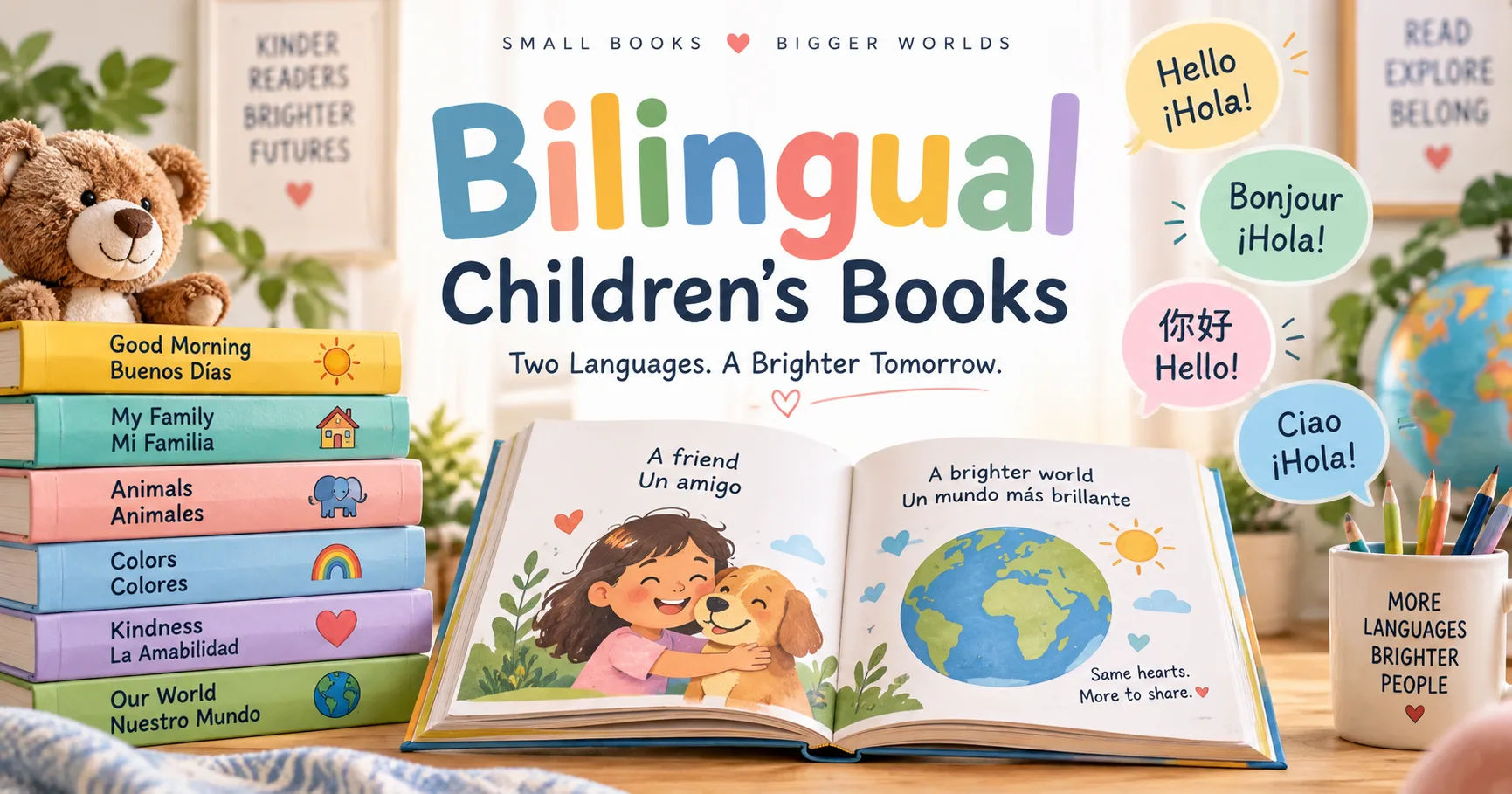
Reading bilingual children's books with a child can be a meaningful way to support language development, vocabulary, comprehension, and family connection. These books present the same story in two languages, allowing children to hear and see different words while enjoying an engaging narrative. For parents, the goal is not simply to read every sentence in both languages.
Instead, it is to create a relaxed reading experience where children can understand the story, connect words with meaning, and gradually become comfortable with both languages.Parents can make bilingual reading more effective by choosing age-appropriate stories, reading aloud regularly, discussing pictures, asking questions, and allowing children to move naturally between languages. The approach may also change depending on the child's age, language ability, interests, and confidence.
Why Bilingual Reading Matters for Children
Children learn languages through meaningful exposure and repeated interaction. A story provides context that helps children understand unfamiliar words instead of memorizing isolated vocabulary.
When a parent reads a story in two languages, the child can connect a word in one language with its equivalent in another. For example, a child might see the word "cat" alongside its translation and then understand that both words refer to the same animal.
Stories also provide more than vocabulary. They introduce children to sentence structure, emotions, characters, cultural ideas, and different ways of describing everyday experiences.
Regular reading can also strengthen the relationship between parents and children. Sitting together with a book creates an opportunity for conversation, questions, and shared attention.
Choose the Right Book
The first step is selecting a book that matches the child's age and language level.
A book that is too difficult may make the child lose interest. A book that is too simple may not provide enough new language. When choosing bilingual children's books, look for stories with clear illustrations, manageable text, and themes that the child already enjoys.
Consider the Child's Stronger Language
Many bilingual children are not equally fluent in both languages. One language may be stronger because it is spoken more often at home, school, or with friends.
Parents should not treat this difference as a problem.
If a child understands the story better in one language, parents can use that language to explain unfamiliar ideas before introducing the corresponding words in the second language.
Follow the Child's Interests
A child who loves animals may enjoy books about pets, forests, or wildlife. Another child might prefer adventure, space, sports, family stories, or fairy tales.
Interest can make language learning feel natural.
The purpose of reading is not to turn every story into a language lesson. Enjoyment should remain an important part of the experience.
Read the Story Before Reading It Together
Parents can benefit from looking through the book before sharing it with their child.
Notice unfamiliar vocabulary, cultural references, complicated sentences, and sections that may require explanation.
This preparation allows the parent to read more confidently.
It also helps parents decide whether they should read both languages equally or use one language more heavily while introducing important words from the other.
Start With the Pictures
Pictures can provide valuable clues about the meaning of a story.
Before reading the text, parents can look at the illustrations with the child and ask simple questions.
"What do you see?"
"Who is this?"
"What do you think is happening?"
"What might happen next?"
These questions encourage children to use observation and prediction skills.
Pictures are especially useful when a child does not understand a word. Instead of immediately translating everything, a parent can point to an illustration and help the child discover the meaning from context.
Read Aloud Naturally
Parents should try to make reading sound like storytelling rather than a vocabulary exercise.
Use a comfortable pace and natural expression. Change your voice slightly for different characters if the child enjoys it.
Pause when something important happens.
Allow the child enough time to look at the illustrations and process the information.
There is no need to rush through the entire book.
A short, enjoyable reading session can be more useful than a long session in which the child becomes tired or frustrated.
Decide How to Use Both Languages
There is no single method that every family needs to follow.
Some parents prefer reading a page in one language and then reading the same page in the second language. Others read the main story in one language while pointing out selected words in the other.
Both approaches can work when they match the child's needs.
Read the Same Passage in Both Languages
Reading the same passage twice can help children make connections between vocabulary and meaning.
For example, a parent may read a paragraph in English and then read the equivalent paragraph in Urdu.
The child hears the same idea expressed differently.
This method can be especially helpful when the child's vocabulary in one language is still developing.
Use One Language for the Story and the Other for Discussion
Another approach is to read the story primarily in one language and use the second language during conversation.
For example, a parent might read the story in English and then ask questions in Urdu.
This allows the child to understand the story while still practicing both languages.
The parent can also introduce selected vocabulary from the book during the discussion.
Avoid Translating Every Word
One common mistake is translating every unfamiliar word immediately.
Constant translation can interrupt the story and make reading feel like studying.
Instead, parents can first use context.
If a character is holding an umbrella and the text describes the umbrella, the picture may already communicate much of the meaning.
If the child still does not understand, a short explanation or translation can help.
The goal is to support comprehension without breaking the flow of the story.
Ask Questions During Reading
Questions encourage children to think about the story rather than simply listen to it.
Parents can ask questions about characters, events, emotions, and predictions.
"What do you think she will do?"
"Why is the boy happy?"
"Where did they go?"
"What would you do in this situation?"
These questions can be asked in either language.
Parents can also repeat the child's answer using a slightly more complete sentence. This gives the child a natural model for language without making the interaction feel like a correction session.
Let Children Switch Languages
Bilingual children may sometimes use words from both languages in the same conversation.
This is common in bilingual environments.
For example, a child may begin a sentence in English and use an Urdu word when that word comes to mind more quickly.
Parents do not necessarily need to stop the child every time this happens.
Instead, they can respond naturally and provide the equivalent word when appropriate.
If the child says, "Mujhe that red ball chahiye," a parent might naturally respond, "You want that red ball? Sure, let's get it."
This provides a useful language model without creating unnecessary pressure.
Encourage Children to Retell the Story
After finishing the book, ask the child to explain what happened.
The child can retell the story in whichever language feels more comfortable.
You can then encourage some words or phrases from the other language.
Retelling helps develop memory, comprehension, sequencing, and speaking skills.
You can also ask the child to describe the beginning, middle, and ending of the story.
For older children, ask them to explain the main message or describe how a character changed during the story.
Use Repetition
Children benefit from hearing familiar language repeatedly.
Reading the same favorite book several times is not a waste of time.
Each reading may reveal something new.
During the first reading, the child may focus mainly on the plot. During later readings, they may notice vocabulary, sentence patterns, details in the illustrations, or character emotions.
Parents can gradually increase participation by asking the child to complete familiar sentences or identify repeated words.
Make Reading Interactive
Reading does not have to mean sitting silently while the parent reads every line.
Children can participate by pointing to pictures, identifying objects, repeating words, making sounds, predicting events, or turning pages.
For younger children, parents can ask them to find specific objects in the illustrations.
For older children, parents can discuss character decisions and compare the two languages used in the story.
Interactive reading keeps the experience engaging and encourages active language use.
Connect Stories to Everyday Life
Parents can extend the language from a book into daily activities.
If a story is about cooking, talk about food and kitchen objects later.
If it is about animals, use animal vocabulary during a visit to a park or zoo.
If the story discusses emotions, use those words when talking about real-life situations.
This connection helps children understand that language is not limited to books.
The words become part of their everyday communication.
Discuss Cultural Differences
Bilingual books can also introduce children to different cultural experiences.
Some stories may include traditional clothing, foods, celebrations, family structures, or social customs.
Parents can discuss these elements without presenting one culture as automatically better or worse.
Ask the child what seems familiar and what seems different.
These conversations can help children develop curiosity, cultural awareness, and respect for different experiences.
Adapt Reading for Older Children
Older children may not need extensive translation or picture-based explanations.
Instead, parents can focus more on vocabulary, interpretation, and discussion.
Ask about unfamiliar expressions.
Discuss why an author chose a particular word.
Compare how the same idea is expressed in each language.
Older children can also read sections aloud themselves.
This gives them opportunities to practice pronunciation, fluency, and comprehension.
Do Not Turn Every Session Into a Test
A child should not feel that every reading session is an examination.
Avoid constantly asking whether the child knows the translation of every word.
Instead, focus on understanding and enjoyment.
If a child makes a language mistake, parents can model the correct form naturally.
For example, if the child says, "He goed home," the parent can respond, "Yes, he went home."
This approach provides correction through conversation rather than criticism.
Create a Regular Reading Routine
Consistency matters more than making every session long.
Parents can choose a convenient time, such as before bedtime, after school, or during a quiet afternoon.
Even a short daily reading routine can give children regular exposure to both languages.
Keep several books available so the child can choose what to read.
Giving children some control can increase motivation.
Support Both Languages Outside Books
Reading should be part of a larger language environment.
Parents can use songs, conversations, games, family discussions, educational programs, and everyday activities to provide additional exposure.
If one language is mainly used at school and another is used at home, parents can intentionally create meaningful opportunities for the less-used language.
The objective is regular communication, not perfect balance.
Children's language abilities can change over time depending on their environment.
What Parents Should Avoid
Parents should avoid comparing a bilingual child with another child who has different language exposure.
They should also avoid forcing children to speak a particular language when they are frustrated or unwilling.
Excessive correction can make children nervous about making mistakes.
Another issue is choosing books solely because they appear educational. A book can teach valuable language skills while still being entertaining.
Enjoyment encourages children to return to reading.
How to Measure Progress
Progress in bilingual reading may appear gradually.
A child might begin recognizing repeated words, understanding more of the second language, answering questions more confidently, or participating in storytelling.
Parents can pay attention to these small changes.
Vocabulary growth is only one measure.
Confidence, comprehension, willingness to communicate, and interest in books are also meaningful signs of development.
Parents should remember that bilingual language development does not always happen evenly. A child may understand many words without using them yet.
Building a Positive Reading Environment
The atmosphere around reading can influence how children feel about languages.
A comfortable space, interesting books, and positive conversation can make reading something children look forward to.
Parents do not need specialized teaching qualifications to create this environment.
Patience, regular interaction, and genuine interest in the child's ideas are often more important.
Children learn from hearing adults communicate naturally.
When parents show curiosity about both languages, children can develop a positive attitude toward multilingual communication.
Conclusion
Reading bilingual children's books effectively is mainly about creating meaningful interaction around stories. Parents can support language development by selecting suitable books, using pictures, reading aloud naturally, discussing the story, and allowing children to participate at their own level.
There is no requirement to translate every sentence or use both languages in exactly the same way. Families can choose an approach that fits their child's age, language abilities, interests, and daily environment.
The most useful reading sessions are often relaxed and interactive. Parents can ask questions, introduce vocabulary, encourage retelling, and connect story ideas to everyday life. Repetition is also valuable because familiar stories give children repeated opportunities to understand and use language.
Most importantly, bilingual reading should remain an enjoyable experience. Children need opportunities to explore languages without feeling that every mistake is a problem. With patience and consistent exposure, stories can become a natural bridge between two languages while also encouraging imagination, communication, and a lasting interest in reading.