
When people choose personalized work aprons, the design and printed name often get the most attention. However, the fabric underneath the customization is just as important. An apron needs to handle movement, spills, repeated washing, heat, friction, and long hours of use. The right material can make an apron comfortable and durable, while the wrong one can become uncomfortable or wear out quickly.
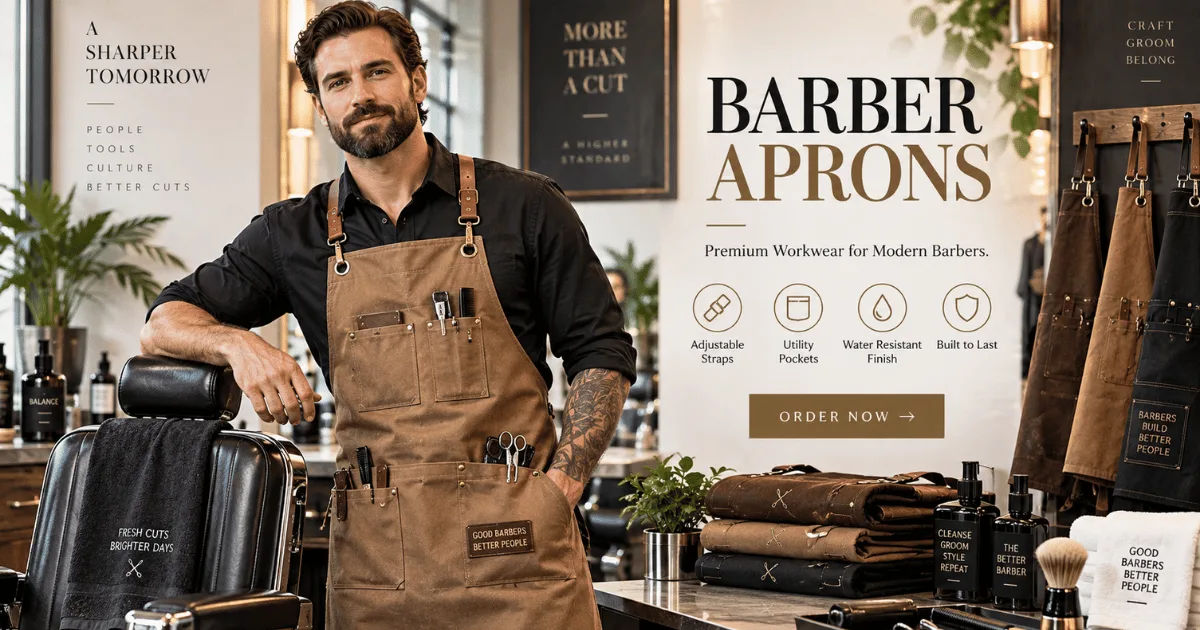
Personalized work aprons are commonly made from materials such as cotton, polyester, cotton-polyester blends, denim, canvas, and other specialized fabrics. Each option has different strengths. Some fabrics are soft and breathable, while others are tougher and better suited to demanding workplaces.
Understanding these materials makes it easier to choose an apron that fits the job rather than choosing one based only on appearance.
Why Does the Material of a Work Apron Matter?
A work apron is more than a decorative layer of clothing. It provides a practical barrier between the worker and everyday workplace mess.
In a kitchen, an apron may encounter oil, sauces, flour, water, and heat. In a workshop, it might be exposed to dust, grease, wood particles, or repeated friction. In a salon, it may need to protect clothing from hair, dyes, and cosmetic products.
The fabric affects how well the apron performs in these situations.
Material also influences comfort. A thick canvas apron can provide excellent protection but may feel heavy during a long shift. A lightweight cotton apron can feel much more comfortable but may not offer the same level of durability.
Customization adds another consideration. Printing, embroidery, patches, and other forms of personalization need to work properly with the fabric.
Common Materials Used for Personalized Work Aprons
Cotton
Cotton is one of the most familiar apron materials. It is popular because it is soft, breathable, and comfortable against clothing or skin.
Cotton can be especially useful in environments where workers spend many hours wearing an apron. Its natural fibers allow air to move through the material, which can make it more comfortable in warm conditions.
Another advantage is its appearance. Cotton can provide a simple, professional look that works well for restaurants, cafés, bakeries, retail businesses, and craft workplaces.
The main limitation is that cotton can absorb liquids. If an apron is exposed to frequent spills, it may become wet and stained more easily than a synthetic fabric.
Cotton can also shrink if it is washed or dried at high temperatures, depending on how the fabric has been treated.
Polyester
Polyester is another common choice for work aprons. It is a synthetic fiber known for durability, shape retention, and resistance to wrinkling.
Polyester generally dries faster than cotton, which can be useful when aprons need to be washed frequently. It also tends to maintain its shape after repeated use.
For businesses that need uniforms to look neat throughout the working day, polyester can be practical.
However, polyester may not feel as breathable as lightweight cotton. In hot working environments, this difference can matter.
Cotton-Polyester Blends
A cotton-polyester blend attempts to combine the advantages of both materials.
The cotton component can provide softness and breathability, while polyester contributes durability, faster drying, and better resistance to wrinkles.
The exact characteristics depend on the blend ratio. A fabric with more cotton may feel softer, while one with more polyester may emphasize durability and easy maintenance.
This balance makes blended fabric a popular choice for everyday workwear.
For many businesses, a blend provides a practical middle ground rather than requiring a choice between completely natural or completely synthetic fabric.
Denim Aprons
Denim is well known for its strength and distinctive appearance. It is commonly associated with jeans, but its durability also makes it useful for work aprons.
Denim aprons can be a strong choice for baristas, chefs, bartenders, mechanics, artisans, and craft workers who want a rugged appearance.
The heavier construction can provide additional protection against everyday wear. Denim also develops a distinctive look over time, which some businesses intentionally use as part of their brand identity.
The downside is weight. Heavy denim can be less comfortable than lighter fabrics, particularly during long shifts or in warm environments.
For a business where appearance and durability are both important, however, denim can be an appealing option.
Canvas Aprons
Canvas is a tightly woven fabric that is valued for its strength. It is often thicker and more structured than ordinary cotton fabric.
Canvas can work particularly well in demanding environments where the apron is exposed to significant friction or rough handling.
Workshops, woodworking environments, gardening businesses, artists, and makers may benefit from this type of construction.
Because canvas is often heavier, it can feel more substantial when worn. Some canvas aprons also include large pockets designed to carry tools or small workplace essentials.
This makes canvas useful when the apron needs to function as both clothing protection and practical equipment.
Waxed and Water-Resistant Fabrics
Some work aprons use treated fabrics designed to resist moisture.
Waxed canvas is one example. A treatment is applied to the fabric to create a surface that can resist water and certain spills more effectively than untreated material.
These aprons can be useful for workers who regularly encounter moisture, although water resistance does not mean the fabric is completely waterproof.
Maintenance is also important. Some treated fabrics require specific cleaning methods, and harsh washing can reduce the effectiveness of the finish.
Before purchasing an apron made from a treated fabric, it is worth checking the manufacturer's care instructions.
Leather Aprons
Leather is a more specialized apron material. It is particularly useful where additional protection from sparks, sharp objects, abrasion, or heavy-duty work is required.
Welders, blacksmiths, woodworkers, and certain trades may use leather aprons because leather can provide substantial protection.
Leather also creates a distinctive premium appearance. However, it is heavier and less breathable than many textile options.
It can also require more specialized care.
For ordinary restaurant or retail work, leather may be unnecessary. For specific trades, however, its protective qualities can make it worth considering.
How Is Personalization Added to Different Fabrics?
The fabric is only part of the equation. The method used to personalize an apron can affect its appearance and durability.
Embroidery
Embroidery uses thread to create text, logos, names, or designs directly on the fabric.
It is especially popular for business logos because it can create a professional and durable appearance.
Embroidery generally works well on sturdy materials such as cotton, polyester blends, canvas, and denim.
However, very lightweight fabrics may not always be ideal for heavy embroidery because the stitching can affect the fabric's drape.
Screen Printing
Screen printing applies ink to the fabric to create a design.
It can be a practical option when a business needs multiple aprons with the same logo or design. It can also provide strong visual contrast.
The quality of the finished result depends on the fabric, ink, printing process, and washing conditions.
Heat Transfer
Heat-transfer methods use heat and pressure to apply a design to fabric.
They can be useful for detailed graphics, names, and smaller production runs.
The final durability depends heavily on the quality of the transfer material and how the apron is washed.
Patches and Other Decorations
Some businesses choose sewn or attached patches instead of printing directly onto the fabric.
This approach can create a more traditional workwear appearance. Patches can also be replaced or updated in some situations.
However, they add another layer to the garment and may not be suitable for every workplace.
Which Material Is Best for Different Jobs?
There is no single fabric that is perfect for every workplace.
For restaurants and cafés, cotton, polyester, and blended fabrics are common practical choices. Comfort, easy cleaning, and professional appearance are usually important.
For workshops, canvas or heavier cotton may be preferable because the fabric needs to tolerate more friction and rough use.
For outdoor or craft work, denim and canvas can provide a useful combination of durability and style.
For heavy-duty trades, leather or specialized protective fabrics may be more appropriate.
The important point is to match the material with the actual working conditions.
What Should You Consider Before Buying?
Workplace Conditions
Think about what the apron will encounter every day.
Does the worker deal mainly with food and liquid? Is there heat involved? Will the apron rub against equipment? Does the worker need pockets for tools?
These questions are more useful than simply asking which fabric looks best.
Comfort
An apron can look excellent and still be unpleasant to wear.
Consider fabric weight, breathability, strap design, and how long the worker will wear it.
A lightweight fabric may be preferable for a busy kitchen, while a heavier material may make sense for workshop use.
Cleaning Requirements
Work aprons often need frequent washing.
Choose a fabric that fits the available cleaning routine. A material that requires complicated care may become inconvenient when dozens of aprons need to be cleaned regularly.
Also check whether the personalization method can withstand repeated washing.
Durability
Consider how often the apron will be used.
An apron worn occasionally at a small craft business may not need the same construction as one worn six days a week in a busy commercial kitchen.
Pay attention to stitching, straps, pockets, seams, and fabric thickness rather than focusing only on the main fabric.
Appearance
Brand presentation matters too.
A café may prefer a clean, modern polyester blend. A handmade furniture business might prefer rugged canvas. A premium restaurant could choose heavier cotton or denim for a distinctive appearance.
The material should support the overall image of the business.
Are Personalized Work Aprons Different From Regular Aprons?
The basic materials can be exactly the same.
The difference is usually the customization. A regular apron may be a plain garment, while personalized work aprons can include a company logo, employee name, business slogan, team identification, or other design.
Because customization becomes part of the garment, businesses should consider how the personalization method interacts with the fabric.
For example, embroidery may be ideal for a sturdy canvas apron, while a lightweight polyester apron may be better suited to a particular printing method.
How Long Can a Work Apron Last?
There is no fixed lifespan because usage makes a major difference.
An apron used occasionally and washed carefully may last much longer than one worn every day in a demanding workplace.
Fabric quality, stitching, washing temperature, drying method, exposure to chemicals, and workplace conditions all influence longevity.
Signs that an apron needs replacement include thinning fabric, damaged seams, broken straps, persistent stains, worn-out pockets, or personalization that is becoming difficult to read.
Regular inspection can help businesses replace damaged aprons before they become a workplace inconvenience.
How Should Different Apron Materials Be Washed?
Always follow the care label first because fabric treatments and blends can vary.
Cotton may require attention to shrinkage. Polyester generally handles regular washing well but can be affected by excessive heat. Denim and canvas may need different washing and drying approaches depending on their construction.
Personalized areas also deserve attention.
Harsh detergents, excessive heat, aggressive scrubbing, and unsuitable ironing can damage printed designs or embroidery.
For businesses managing many aprons, following a consistent washing procedure can help extend the life of both the fabric and the customization.
Choosing the Right Fabric for Your Business
The best approach is to start with the job rather than the decoration.
Ask what workers need from the apron. Protection? Breathability? Pockets? Easy washing? A premium appearance? Heavy-duty durability?
Once those requirements are clear, the material becomes easier to select.
For general-purpose workwear, cotton-polyester blends offer a useful balance. Cotton is attractive when comfort and breathability are priorities. Polyester can be practical when easy maintenance and durability matter. Denim and canvas are better suited to rugged styles and demanding use, while leather is more appropriate for specialized protective applications.
The personalization method should then be selected to complement the fabric.
Conclusion
So, what are personalized work aprons made from? Most are made from practical fabrics such as cotton, polyester, cotton-polyester blends, denim, or canvas, while specialized applications may use water-resistant materials or leather.
Each material has its own strengths. Cotton offers softness and breathability. Polyester provides durability and easy care. Blended fabrics balance several useful properties. Denim and canvas offer a stronger, more rugged feel, while leather provides specialized protection for demanding trades.
The right choice ultimately depends on how the apron will be used. A busy café, restaurant, workshop, salon, craft business, and industrial workplace can have very different requirements.
It is also important to consider the personalization itself. Embroidery, screen printing, heat transfers, and patches can produce different results depending on the fabric. A high-quality apron should therefore be considered as a complete garment rather than simply a piece of fabric with a logo added to it.
When comfort, durability, cleaning requirements, workplace conditions, and branding are considered together, it becomes much easier to choose personalized work aprons that look professional and remain useful through regular working life.